
LA28 will be a “Games for All” as Los Angeles is hosting its first Paralympic Games and third Olympic Games.
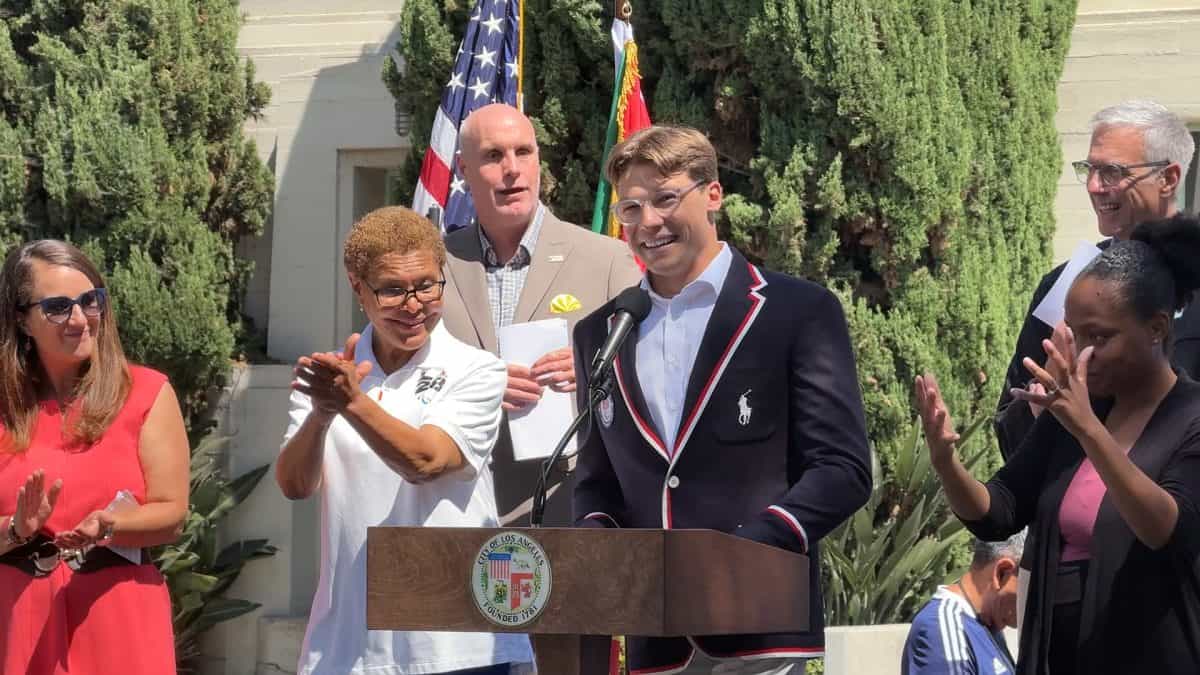
Los Angeles, California (Elevate) – Community leaders joined Paralympic athletes outside the historic site of the swimming pavilion, built for the 1932 Olympic Games and now known as the LA84/John C. Argue Swim Stadium, to mark the 35th anniversary of the Americans with Disabilities Act (ADA). On July 25, 2025, Los Angeles Mayor Karen Bass signed the official Games Host City Accessibility Commitment to ensure a “Games for All” approach to the upcoming LA28 Olympic and Paralympic Games.
By Chris Ian Garlington | ElevateSoCal.com
ADA 35th Anniversary Press Conference (All Speakers)
Team USA Paralympic Swimmer Jack O’Neil
As Los Angeles prepares to host the world’s most elite athletes, the LA28 Organizing Committee and City Hall have officially unveiled a robust commitment to accessibility. This initiative, fundamentally referred to as the “Games for All” strategy, aims to ensure that the 2028 Paralympic Games are the most inclusive in history. This commitment sets a new global standard for how major metropolitan areas accommodate athletes, spectators, and residents with disabilities.
The LA28 Paralympic Games are scheduled to take place from August 15 to August 27, 2028. Hosted throughout the Greater Los Angeles region, the event will mark the first time in history that Los Angeles hosts the Paralympic Games, despite having hosted the Olympics twice before.
The 2028 Paralympic Games as a Catalyst for Change
The 2028 Games are more than a sporting event; they are a catalyst for social and structural transformation. By bringing 4,480 Paralympians to the world stage in Southern California, the event serves as a powerful platform to challenge societal perceptions of disability and human potential.
For the City of Los Angeles, this event provides a deadline and a directive to accelerate infrastructure improvements—from transit to digital services—that will benefit Angelenos for decades. The “Games for All” vision is a pledge that the legacy of 2028 will not be found in temporary stadiums, but in a permanently more accessible, equitable, and navigable city.


Leadership Perspectives: A Unified Commitment
The leadership at LA28, the International Paralympic Committee (IPC), and local government have issued strong statements regarding the importance of these initiatives.
From the City of Los Angeles
Los Angeles Mayor Karen Bass underscored the city’s role in this transformation, highlighting how the event serves as a catalyst for local improvement:
“While we have come a long way since the Americans with Disabilities Act was signed 35 years ago, we still have more to do to ensure that Angelenos of all abilities can thrive in Los Angeles. We are working across City departments and alongside private partners to develop and implement a Games Accessibility Plan so that L.A. hosts the most accessible Games possible. For too long, people with disabilities have not been treated with the dignity they deserve, and as we prepare to host the City’s first-ever Paralympic Games, it’s time that there is equal access to all Games-related programmes, services, activities, facilities, and information so that everyone is uplifted by the legacy.”
Councilmember Imelda Padilla, who introduced the motion for the Accessibility Plan, emphasized the structural change:
“Hosting the Paralympic Games for the first time is a historic honour, and we must rise to the moment by creating a Games—and a city—that is truly welcoming to all.”
Akiko Tagawa, President of the Los Angeles Commission on Disability, noted the personal significance of the pledge:
“As a third-generation Angeleno with a nonvisible disability, I take great pride in knowing that our City is building on the promise of the ADA. Today’s commitment reflects both the progress we’ve made and our ongoing efforts to build a more inclusive and accessible Los Angeles.”
From LA28 and Global Leaders
Casey Wasserman, LA28 Chairperson, emphasized the foundational nature of this goal:
“From day one, our mission has been to host a Games that reflects the diversity and spirit of Los Angeles. Accessibility isn’t just a feature of our plan; it’s the heartbeat of our delivery. We are committed to ensuring that every athlete, fan, and visitor can experience the magic of the Games without barriers.”
Reynold Hoover, LA28 Chief Executive Officer, highlighted the cultural impact:
“The LA28 Paralympic Games will be an incredible opportunity to reshape the conversation around individuals with disabilities within the sports world and beyond and has the capacity to serve as a catalyst for progress, inclusivity and global recognition of the world’s third largest sporting event.”
Janet Evans, LA28 Chief Athlete Officer, spoke to the standard being set for competitors:
“As an athlete, I know that the environment you compete in dictates your performance. For our Paralympians, that means having world-class facilities that are designed with their specific needs in mind from the ground up. We aren’t just meeting standards; we are striving to exceed them so every athlete can focus on what they do best: making history.”
Andrew Parsons, President of the International Paralympic Committee (IPC), praised the city’s vision:
“The LA28 Games represent a unique opportunity to showcase the Paralympic Movement in a city known for its influence on global culture. The commitment we see from the LA28 team to create truly ‘Games for All’ will not only provide an incredible experience for the athletes but will leave a blueprint for urban inclusivity worldwide.”
Infrastructure and Venue Accessibility
Los Angeles is auditing every venue location to ensure they exceed minimum legal requirements. Key focus areas include:
- Universal Design: Creating environments usable by everyone without specialized adaptation. This includes high-contrast wayfinding and tactile paving.
- Diverse Seating: Ensuring wheelchair-accessible seating is integrated throughout various price points and vantage levels, rather than being isolated.
- Sensory Inclusion: Establishing “quiet rooms” and sensory-friendly zones to support neurodivergent spectators and those with sensory processing needs.
Transportation: The “Car-Light” Vision
One of the most significant challenges is transportation. The committee is collaborating with LA Metro to ensure rail stations and bus lines are fully accessible. The goal is a “car-light” Games, where high-frequency shuttles and rail extensions provide a seamless, barrier-free “last-mile” connection between transit hubs and venues.
Digital Inclusion: Accessing the Games Everywhere
The spectator experience begins long before the stadium gates. Kathy Carter, LA28 Chief Executive Officer, emphasized the digital priority:
“To achieve ‘Games for All,’ we must ensure our digital platforms are as welcoming as our physical venues. Whether you are purchasing a ticket, checking a score, or navigating to a stadium, the technology must work for everyone. This is a critical component of our commercial and operational strategy.”
LA28 has pledged to meet the highest standards of digital accessibility (WCAG 2.1 Level AA) for all official platforms, including ticket sales and event broadcasts.
Beyond 2028: Creating a Lasting Legacy
The “Legacy Effect” is the ultimate measure of success for LA28. This includes the permanent appointment of the City’s first-ever Accessibility Chief within the Office of Major Events to oversee the ongoing implementation of the Games Accessibility Plan.
Scott Blanks, Vice President of Accessibility and Employment at the Braille Institute, highlighted the attitudinal shift needed:
“My experience as a Paralympian taught me that the greatest barriers aren’t always physical — they’re attitudinal. The Paralympics are a powerful reminder of human potential, and LA28 can be a catalyst — not just for athletes on the world stage, but for every Angeleno with a disability seeking access, opportunity, and respect.”
Through inclusive hiring practices and infrastructure investments, Los Angeles aims to prove that when you design a city for everyone, you build a stronger community for all.
Frequently Asked Questions
What are the official dates for the 2028 Paralympic Games?
The LA28 Paralympic Games will be held from August 15 to August 27, 2028.
Where will the events take place?
Events are spread throughout the Greater Los Angeles area, including the LA Memorial Coliseum, the USC Sports Center, the fields in Carson, and Alamitos Beach in Long Beach.
How does “Games for All” differ from standard compliance?
While legal compliance (like the ADA) provides a baseline, “Games for All” focuses on Universal Design and proactive inclusion, ensuring that accessibility is woven into the planning phase rather than added as an afterthought.
LA28 Paralympic Venue Guide
The following table highlights the distribution of Paralympic sports across Southern California and the specific venues that will be adapted to meet the “Games for All” standard.
| Zone | Venue | Paralympic Sports |
| Downtown LA (DTLA) | Crypto.com Arena | Wheelchair Basketball |
| LA Convention Center | Boccia, Para Judo, Para Table Tennis, Para Taekwondo, Wheelchair Fencing | |
| Peacock Theater | Goalball | |
| Exposition Park | LA Memorial Coliseum | Para Athletics (Track & Field), Closing Ceremony |
| USC Sports Center (Galen Center) | Wheelchair Rugby, Para Badminton | |
| Long Beach | Alamitos Beach | Blind Football |
| Marine Stadium | Para Rowing, Para Canoe | |
| LB Convention Center / Arena | Sitting Volleyball, Shooting Para Sport, Para Swimming, Para Climbing | |
| Carson | Dignity Health Sports Park | Para Archery, Wheelchair Tennis, Para Cycling (Track) |
| Coastal / Other | Venice Beach | Para Triathlon, Para Marathon (Start) |
| Santa Anita Park | Para Equestrian |
Speakers in Our Video Include:
Reynold Hoover, LA28 Chief Executive Officer
Jack O’Neil, Paralympic Swimmer, Team USA
Scott Blanks, Vice President, Braille Institute
Imedla Padilla, LA Councilmember District 6
Karen Bass, Mayor of Los Angeles
This story was developed with the assistance of AI and was strictly reviewed, fact-checked, and edited by the Elevate SoCal editorial team to ensure accuracy and original perspective.
Elevate SoCal is a media project with a mission of ‘finding the good out there‘ by covering a variety of stories across Southern California and beyond.
Elevate SoCal is part of Skylab Enterprises, a mission-driven organization designing and demonstrating ‘the intention economy’ from the leading edge of kindness… and applying this ethos to an array of industries.
We’re expanding our mission, vision, purpose, and programs. Learn more about opportunities within our partnership ecosystem here.
Thanks for your support!
Follow us on Instagram at instagram.com/elevatesocal_official
Check us out on YouTube at youtube.com/@elevatesocal

You must be logged in to post a comment.